The conversation nobody has at lease signing
A restaurateur signs a lease. The landlord says the space is ready for buildout. The operator has a 12-month construction plan, a 6-month runway, and a model that shows profitability in month 4 of operations.
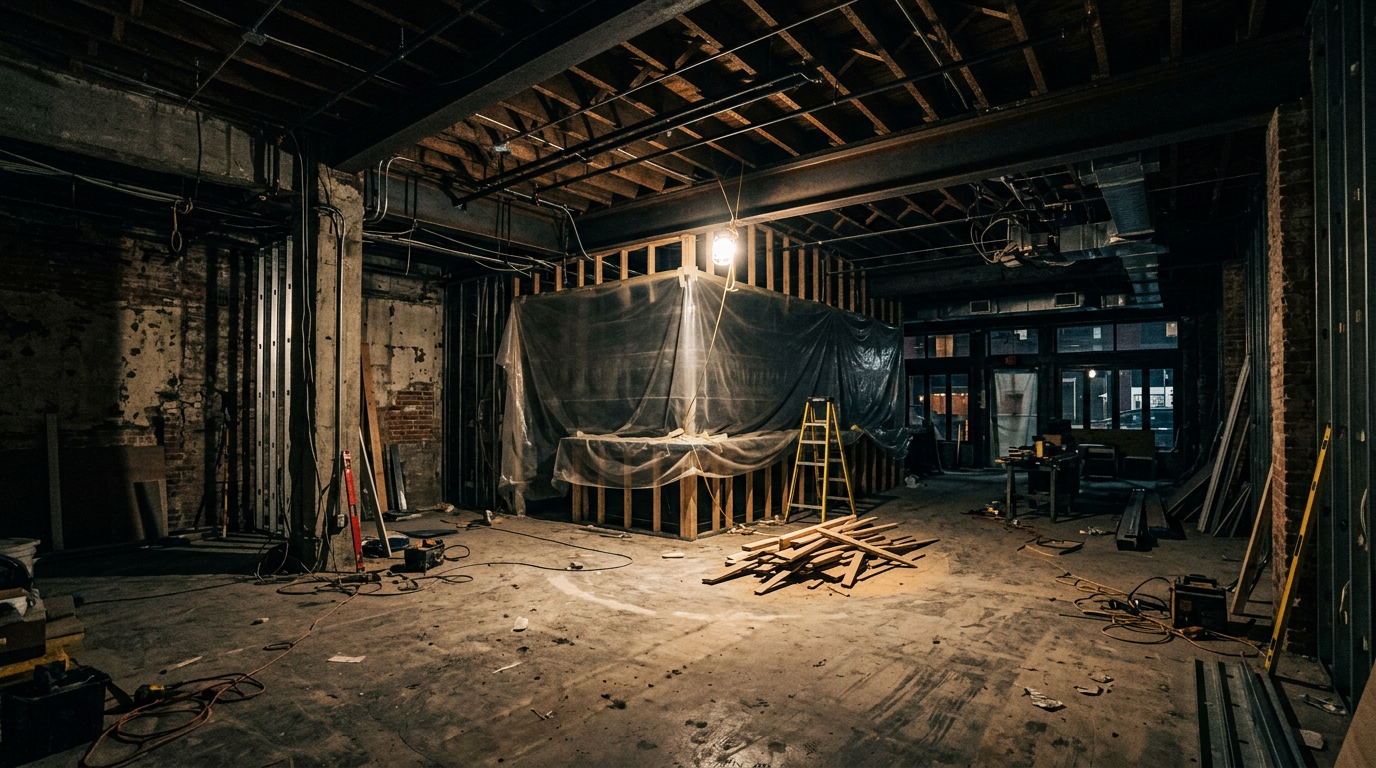
Fourteen months later, they're still not open. They've spent $400,000, their runway is gone, and they're trying to decide whether to put another $150,000 on personal credit to get across the finish line.
This is not a freak case. This is the modal outcome for independent restaurant openings in New York City. The city's regulatory timeline is a specific kind of obstacle course that is well-documented in aggregate and almost never communicated to operators before they're inside it.
Stage one: DOB permits
Before construction begins, you need Department of Buildings permits. For a restaurant buildout that includes plumbing changes, hood installation, or any structural modifications, you're looking at a minimum of 2-3 months for permit approval in a straightforward case. In a landmarked building, a building with open violations on file, or a space that requires zoning analysis, add another 1-4 months.
The DOB process also requires a licensed architect to file the plans. Finding a good restaurant architect who is not already overbooked takes time. Getting the plans filed correctly takes time. Responding to DOB comments and revisions takes time. Each step has its own timeline that doesn't compress much regardless of how much you want it to.
One practice note: hiring an expediter to navigate the DOB process is standard in NYC and genuinely worth the $3,000-$8,000 cost. An experienced expediter knows which examiners are in which rooms, what the current processing backlogs are, and how to file plans in a way that minimizes revision requests. This is not optional information for someone doing this for the first time.
Stage two: Con Edison commercial service
If your space requires upgraded electrical service (and most restaurant buildouts do, because kitchen equipment demands are high), you're in Con Edison's queue. New commercial electrical service installation has been running 2-4 months in most parts of Manhattan and Brooklyn since 2022. Queens and the Bronx can be faster depending on the local work order backlog.
This is a hard timeline you cannot expedite with money. Con Edison has its own scheduling constraints and crew availability. Your contractor can't speed it up. Your landlord can't speed it up. The only strategy is to apply as early in the process as possible, ideally at lease signing if you know you'll need upgraded service, because the clock starts when you apply, not when your contractor is ready.
Stage three: SLA license
The State Liquor Authority processes license applications on its own schedule, which is nominally 90-120 days but routinely runs longer for first-time applicants in high-density community board areas.
In Community Board districts that have taken positions against new liquor establishments (several neighborhoods in Manhattan, parts of Brooklyn), the community board review process adds a hearing requirement that extends the timeline and introduces political uncertainty. A restaurant in a contested district can wait 6-8 months from application to license grant, and there's no guarantee of approval.
The SLA application itself requires a detailed floor plan, a business history, personal background for every owner with more than 10% equity, and a description of the proposed use. Getting all of this assembled correctly on the first submission matters because errors restart the clock.
Stage four: DOH pre-operational inspection
Before you open, the Department of Health needs to inspect the space and confirm it meets code requirements. You can't schedule a pre-op until construction is complete, which means you don't get into the queue until late in the buildout. Pre-op inspection scheduling currently runs 4-8 weeks depending on borough and inspector availability, with Brooklyn and the Bronx running faster than Manhattan in most quarters.
The pre-op is a pass/fail. If you fail, you're waiting for a re-inspection, which adds another 2-4 weeks minimum. Common failure points: improper ventilation documentation, grease trap that isn't yet approved, plumbing that wasn't inspected at the rough-in stage.
The cash flow math
Here's what this timeline means in dollars. A restaurant with $100,000/month in operating costs (rent, carrying costs on equipment loans, pre-opening staff, utilities, insurance) running 6 months over its planned timeline has spent $600,000 in unplanned carrying costs before the first customer walks in.
Most operators budget 20-25% of their capital raise for pre-opening costs. In a realistic NYC timeline, that needs to be 40-50%.
The one thing that helps most
Hiring someone who has opened restaurants in New York before. Not a general contractor with restaurant experience. Someone who has navigated the DOB, the SLA, the DOH, and Con Edison in the last 18 months, specifically.
The regulatory landscape changes. The processing times change. Who's in what DOB office changes. An experienced NYC restaurant project manager is worth their fee in the first month by keeping you out of the avoidable delays that eat every first-time operator's timeline.