What the headlines miss
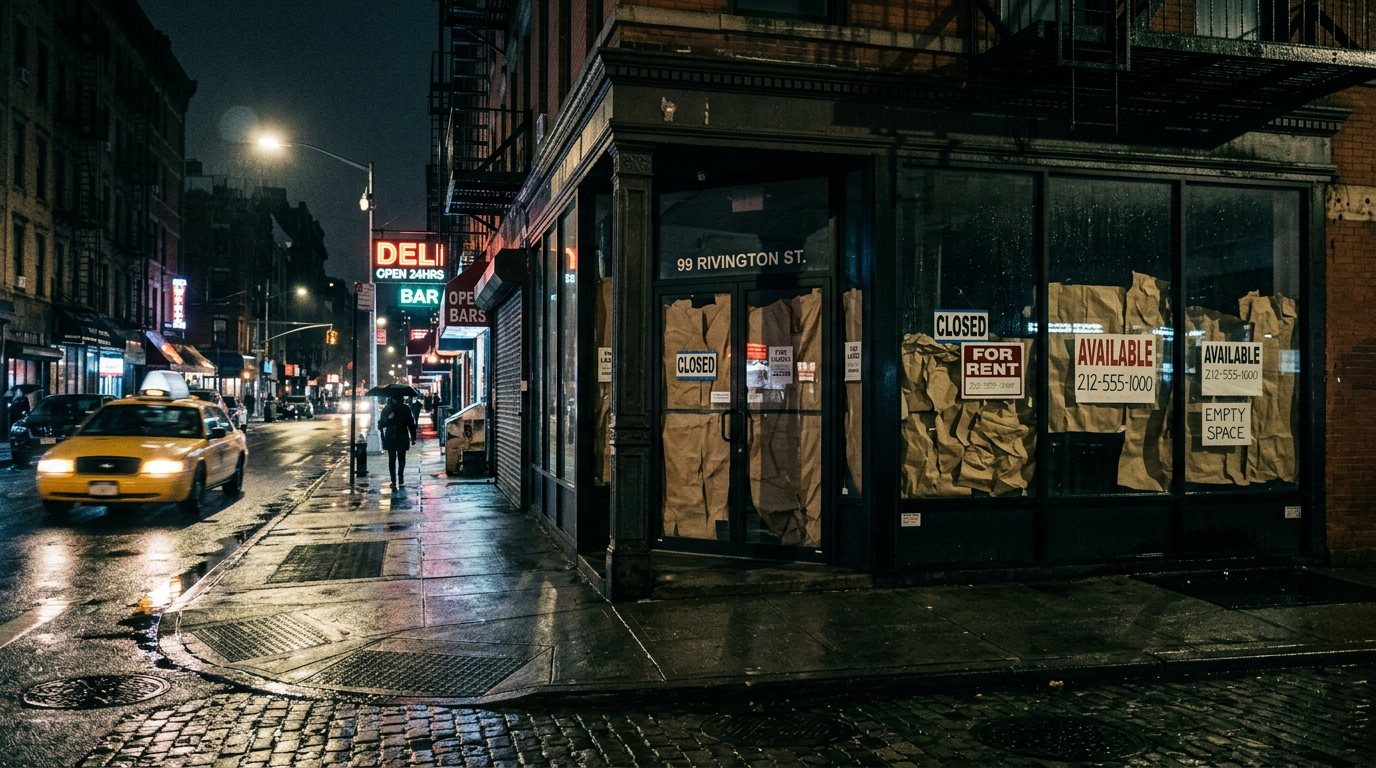
When a restaurant closes in New York, the coverage usually mentions rent and competition. "Squeezed out by rising rents" is the headline for places in Soho and the West Village. "Couldn't compete in a saturated market" is the headline for the neighborhoods that got trendy and then crowded.
These aren't wrong. But they're the final chapter of a longer story, and they're often used as an explanation when they're actually a symptom.
I've watched a significant number of restaurants close over 20 years in this industry. Here's what I've actually seen.
The lease problem runs deeper than rent level
Rents in New York are high. That's real. But the operators who close because of rent are often not closing because the base rent is too high. They're closing because they signed lease terms they didn't fully understand.
The rent escalation that felt manageable in year one becomes genuinely painful in year seven. The triple-net structure where the tenant pays not just base rent but also property taxes, insurance, and maintenance creates variable occupancy costs that can swing $2,000-$5,000/month year over year in some buildings. The personal guarantee that seemed like an abstract requirement at signing becomes a very concrete reality when the operator has to decide whether to close or keep funding losses from personal savings.
None of this is hidden. It's in the lease. The problem is that most independent operators sign leases with minimal professional guidance because good restaurant lawyers are expensive and the landlord has been pushing to get to contract for two months.
Undercapitalization shows up late
The capitalization problem in NYC restaurants is specific: most operators raise enough to open, not enough to get stable.
A restaurant takes 12-18 months to find its footing in New York. The first few months are the opening spike: media coverage, word of mouth, curiosity traffic. Month three through eight are often the hardest, when the opening energy has faded, regulars haven't fully developed, and the operation is still getting efficient. This is the window when undercapitalized restaurants fail.
The operator who had a six-month runway going into opening has two months left at this point. They start making operational decisions under financial pressure: cutting quality, reducing staff, pulling back on marketing. Guests notice. Revenue continues to decline. The spiral is slow but it's visible if you're watching.
The capitalization number for a new restaurant in NYC that actually gives you enough runway is typically 12-18 months of full operating costs on top of your build-out and opening costs. For most restaurants, that's $600,000 to $1,000,000 in total capital before you generate a dollar of revenue.
Owner dependency in a high-cost market is fatal
In a market where every percentage point of margin matters, an operation that can only perform when the owner is present is an operation that's permanently limited.
The owner who works 70 hours a week and keeps the restaurant at 85% efficiency while present is also the owner who sees the restaurant drop to 65% efficiency when they take a vacation or get sick. In most markets, you can absorb that. In New York, where your rent is $20,000/month and your margins are 6-9%, a two-week dip at 65% efficiency can be the difference between a profitable month and a month that requires a draw from personal savings.
The restaurants that survive through ownership transitions, whether to new ownership or to professional management, are the ones that were built as systems from the start. The ones that were built around a founder's presence almost always decline after the founder exits.
The warning signs that show up 12-18 months early
This is the thing I want operators to hear. Closures are almost always visible before they happen. Not certain. But visible.
Revenue in the bottom quartile of your weekly distribution is trending lower. The 20th-percentile week three years ago was $50,000. Now it's $38,000. The floor is dropping.
Your average check is flat or declining in nominal terms, which means it's declining in real terms against your cost increases.
Your staff tenure is dropping. The team that's been with you for two or three years is starting to leave. New hires don't stay as long as they used to. This is an early signal that something is wrong with the culture or the compensation, both of which connect to the business's financial health.
Vendor payment timing is stretching. You're paying invoices in 45 days that you used to pay in 15. Your vendors notice even if they don't say anything.
What operators do instead
They adjust the menu. They hire a new marketing person. They do a soft refresh of the interior. They bring in a consultant to look at operations.
All of those can be right responses. They're wrong responses if they're substitutes for confronting the actual problem. A restaurant with a structural lease problem doesn't need a new menu. It needs a lease renegotiation or an exit plan.
The operators who successfully navigate a turnaround are the ones who are honest earlier. Before the runway is gone. Before the options narrow to "keep going" or "close."